



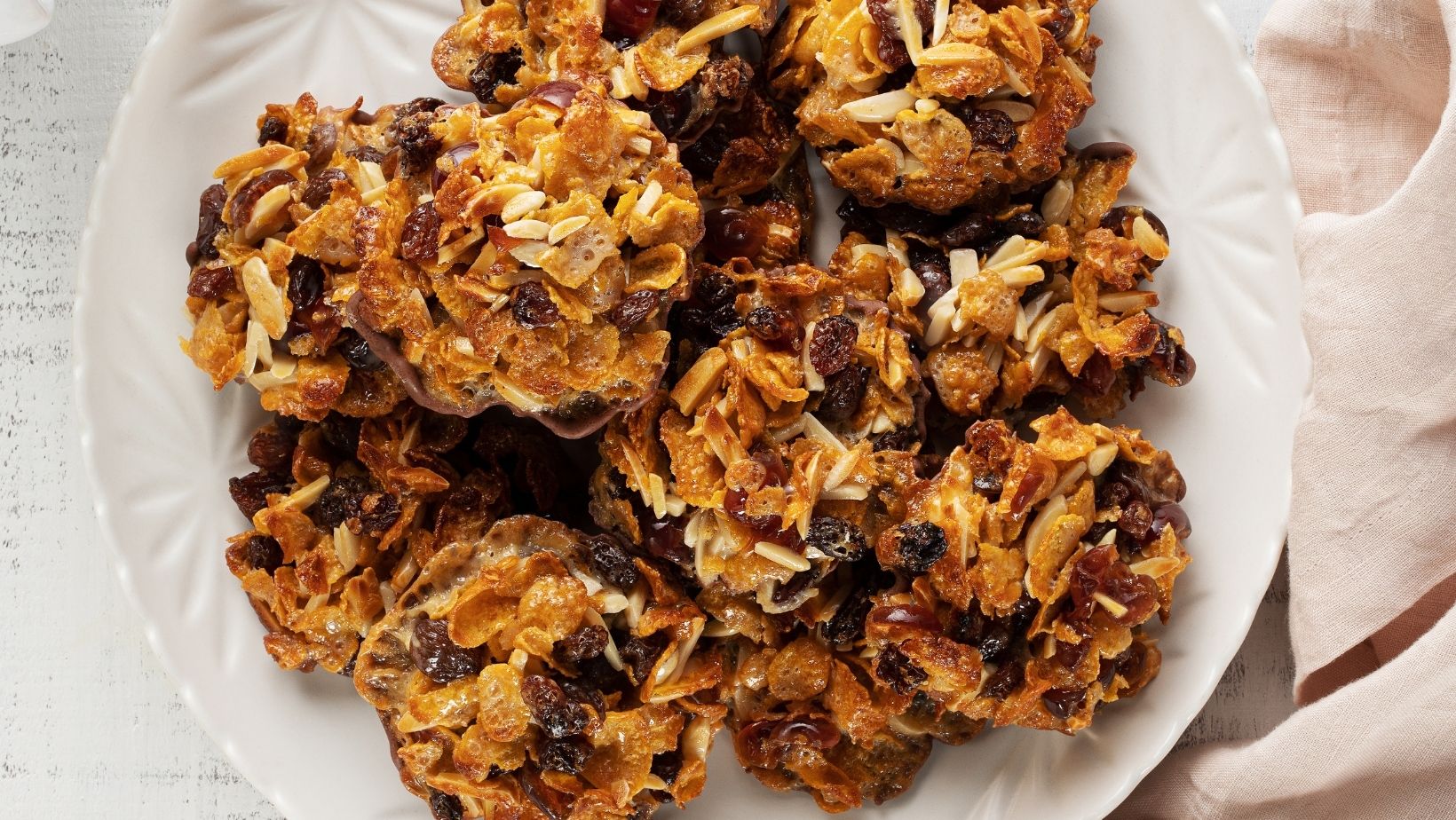
Easy Florentines
Preparation 15 Minutes
Cook 15 Minutes
Serves 12
Method
Preheat oven to 180ºC (160ºC fan).Line 2 baking trays with baking paper.
In a large bowl, combine Corn Flakes, almonds, sultanas and cherries, mix well.Pour over the sweetened condensed milk and stir to coat.
Place an egg ring onto prepared pan.Spoon the mixture into the egg ring, filling to the top and gently pressing down to compact.Remove egg ring and repeat, with remaining mixture, 6 biscuits on each tray.
Bake biscuits for 15 mins, swapping the trays around half way.Remove from oven and allow biscuits to cool completely on trays.
Melt the chocolate and brush onto the bases of each biscuit.Rest cookies on a baking rack, chocolate side up, to allow chocolate to set.
You will need a 7.5cm egg ring for this recipe
Ingredients
70g Corn Flakes
75g Sunbeam Slivered Almonds
110g Sunbeam Sultanas
70g Sunbeam Glacé Cherries, roughly chopped
165ml sweetened condensed milk
150g milk chocolate melts
Recipe Collection

Carrot, Walnut & Raisin Cake
Preheat oven to 180℃.
Grate young fresh carrots to give one full cup & strain the juice from 440g can of crushed pineapple.
In a bowl mix 1 cup of plain flour, 1 tsp baking powder, 3/4 tsp bicarb soda, 1/2 tsp each of salt & cinnamon & 3/4 cup caster sugar. Add 2 eggs and 5 Tbsp oil (just under 1/3 cup).
Sir in the grated carrot, crushed pineapple & 1/4 cup Sunbeam walnuts, chopped. Bake in a moderate oven 175 oC for 40 – 45 minutes and cool before covering with topping. (Note: We slightly froze the cake to make firm to slice into layers to add frosting in between)
To make cream cheese topping, place in a bowl butter, cream cheese, vanilla, icing sugar and beat very well. If too thick add a small amount of milk to give a smooth consistency.
Sunbeam Spiced Christmas Cake
In a large bowl, combine mixed fruit, cherries, nuts, apple, golden syrup and liquor. Mix well, cover and allow to stand overnight (or up to 24 hours for amazing flavour).
Preheat oven to 150ºC (130ºC fan forced). Very generously grease the bundt tin, ensuring butter is in all creases.
Add sugar and butter to the bowl of a stand mixer fitted with a beater attachment. Beat until fluffy and pale. With the motor running, add eggs one at a time, beating until incorporated before adding the next.
Add flour and spices, beat on low until just combined. Add orange zest and soaked fruit mixture and beat until just combined.
In a small bowl mix together orange juice and bicarbonate of soda, add to the cake batter and beat until just incorporated.
Spoon batter into the prepared bundt tin, using a spatula to press mixture into any crevices and flatten the surface.
Bake for 2 ¼ to 2 ½ hours or until the cake springs back when gently pressed in the centre. Allow cake to cool in the tin for an hour then invert onto a baking rack to remove and allow to cool completely.
Dark Chocolate Rocky Road
- Grease and line base and sides of a 27cm x17cm slice pan with baking paper, extending the paper over sides.
- Place chocolate and coconut oil in a large heatproof bowl over saucepan one-third filled with simmering water. Stir until melted and remove from heat.
- Add raisins, marshmallows, macadamias, coconut and three-quarters of the seed mix (saving some for the top). Stir to combine and spread into prepared pan. Scatter with reserved seed mix.
- Set aside to cool for 1 hour or until set. Refrigerate if weather is hot. Cut into 24 pieces to serve.
Walnut & Sultana Monkey Bread
Prepare the dough: The dough comes together with a mixer. You can also make the dough by hand, but it requires a bit of arm muscle. After the dough comes together in the mixing bowl, it’s time to knead. You can simply continue beating the dough with the mixer for this step or you can knead the dough by hand.
Let the dough rise: The dough rises in about 1-2 hours in a relatively warm environment.
Punch down the dough: Punch down the dough to release the air.
Shape & coat dough balls: Pull off little pieces of dough and roll into balls. Dunk the balls into melted butter, then coat with cinnamon sugar. Little bakers love to help out with this step! Good thing to note: the heavier the cinnamon-sugar coating, the more these little monkey bread bites will taste like gooey cinnamon rolls.
Let the shaped monkey bread rest for 20 minutes: Arrange the coated balls in a flat oven proof pan or a cast iron pan, cover lightly, then set aside to rest as you preheat the oven. The balls will slightly rise during this time.
Top with buttery brown sugar sauce: Before baking the monkey bread, mix melted butter, brown sugar, and vanilla extract together. Stir in the nuts. Pour any remaining sauce sauce all over the dough balls.
Bake:
Bake until the top is lightly browned, about 40 minutes.
Invert onto serving plate: Allow the monkey bread to cool for 5-10 minutes, then invert it onto a serving plate.
Drizzle with vanilla icing: Whisk confectioners’ sugar, milk, and vanilla extract together until smooth. Drizzle all over the warm monkey bread. Top with extra nuts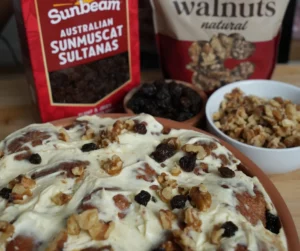
Handmade Chocolate Bars
- Line the base and sides of 2, 10 x 20cm loaf pans, or 4, 6 x 12cm mini loaf pans.
- For topping choice Rum ‘n Raisin, combine raisins, rum and cinnamon in a bowl and set aside until required.
- Place chocolate in a glass bowl and heat in the microwave in 30 second increments until half chocolate is melted. Stir chocolate constantly until all the chocolate is melted.
- Pour chocolate evenly between pans and whilst still in melted form, working quickly, decorate with preferred toppings. Allow to set at room temperature and store in an airtight container when set. Wrap and give away as gifts.
Roasted Cauliflower Soup
- Cut cauliflower roughly into pieces, toss with half the oil and cumin. Season well. Spread onto a lined oven tray and roast at 180°C for 25 minutes or until tender.
- Heat remaining oil in a large pot. Add onion and garlic, cooking until onion is tender. Add roasted cauliflower pieces, potatoes and the stock. Bring to the boil, reduce heat and simmer for 20 minutes.
- When potatoes are tender, puree soup with a food processor or handheld blender, until smooth and creamy. Return to heat until required.
- For walnut crumb, heat oil in a frying pan and toast breadcrumbs and walnuts until golden and crisp. Allow to cool slightly, then stir in parsley and currants. Season well. Serve hot soup with a scattering of crumbs.