



Zucchini Salad
Preparation 20 Minutes
Cook 10 Minutes
Serves 8 – 10 as a side
Method
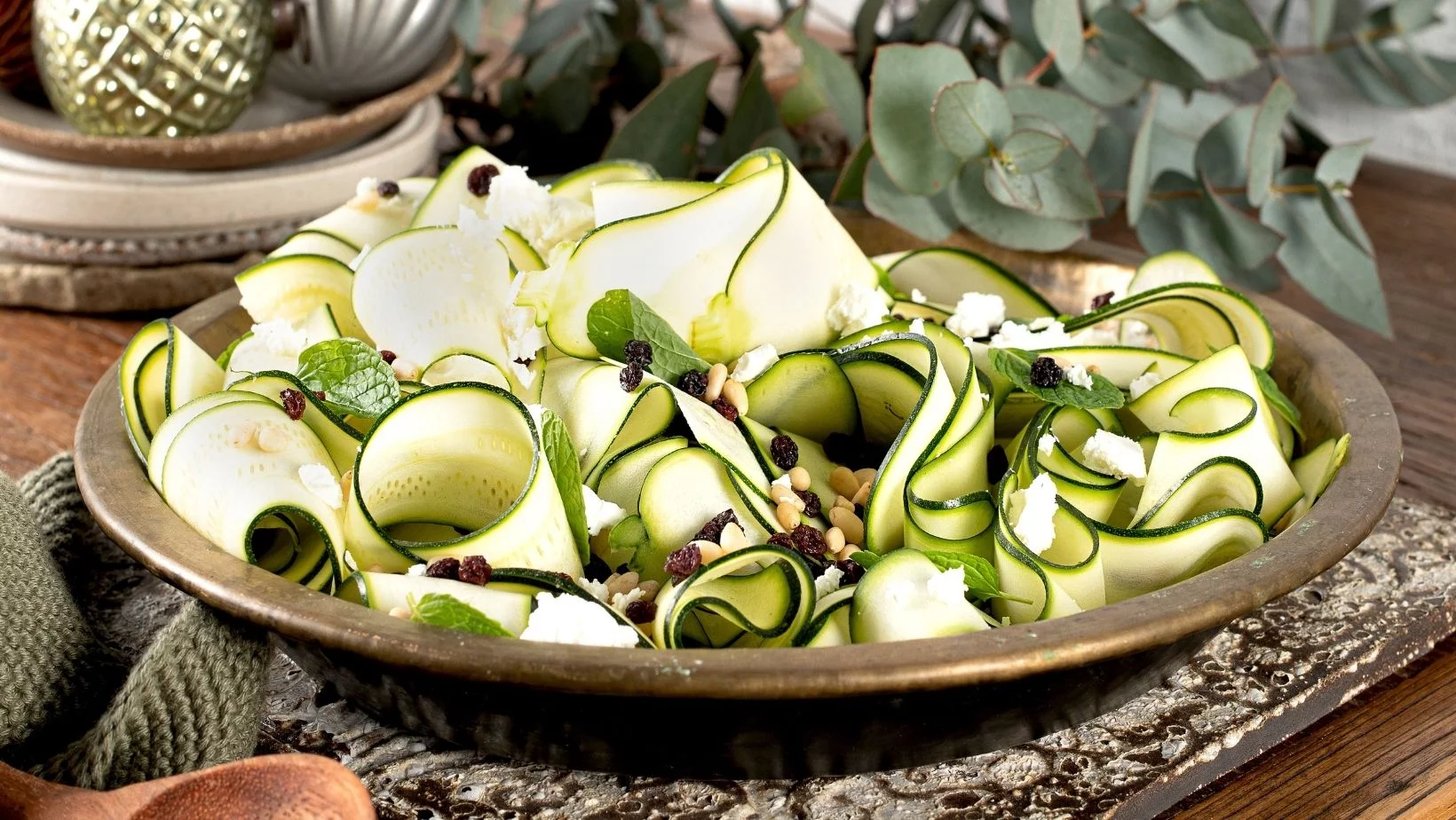
Cut the zucchini into long, thin ribbons using a mandolin or vegetable peeler.
Whisk together lemon juice and olive oil, season. Pour over the zucchini, gently toss to combine then allow to sit for 10 mins to marinate.
Drain zucchini and arrange on a serving platter. Sprinkle over pine nuts, sultanas, raisins and feta. Scatter over mint leaves just before serving.
Ingredients
4 zucchinis
Juice of 2 lemons
Splash of olive oil
80g Sunbeam pine nuts, toasted
80g Sunbeam Sultanas
60g Sunbeam Currants
100g Danish feta, roughly crumbled
1 small bunch of mint, leaves picked
Sea salt and freshly cracked black pepper
Recipe Collection

Spiced Oat Slice
- Pre-heat oven to 180°C (160°C fan-forced). Line an 18 x 28cm slice tray. Place honey and butter in a small saucepan and heat gently until butter is melted.
- Place oats, dates, sultanas, apricots, seeds and cinnamon in a mixing bowl. Pour in the melted honey mixture and mix well. Press into prepared tray and bake for 20 minutes. Allow to cool. Cut into bars.
Notes:
Lightly wipe your knife blade with a little oil when cutting dates. It will ensure the dates don’t stick to the knife and making cutting easier.
Sunbeam Decadent Fruit Mince
Mix all the ingredients in a large bowl till combined.
Place into sterilised jars and store in a cool dark dry place to macerate for as long as you can before using.
This fruit mix made ahead can be used for so many great Sunbeam Recipes!
Butter Chicken
1. Heat oil in a frying pan over low heat, add onion, ginger and garlic cooking for 3-4 minutes until tender. Stir in spices and cook for 1 minute until fragrant. Add almond meal and continue cooking a further minute. Transfer mixture to the bowl of a slow cooker.
2. Add the chicken to the slow cooker arranging in one layer and add the passata and water. Cover and cook on low heat for 8 hours. Stir in the cream and serve sprinkled with almonds and accompanied with rice and naan bread.
*For a faster cooking time, cook on High heat for 4 hours.
Caramel Walnut Brioche Pudding
Butter both sides of sliced Brioche and layer in greased pan (mine is 8” x 11”).
2. Sprinkle dried Mixed fruit and Walnuts evenly over bread.
3. Mix eggs, sugar and vanilla paste until sugar is dissolved,then mix together with Cream and Milk.
4. Pour egg mix over Brioche and let soak whilst you make your caramel.
5. In heavy based pan add butter, golden syrup and condensed milk, stir until all melted on low heat. This can then be spooned over Brioche into all gaps, finish by sprinkling more Walnuts and Cinnamon.
6. Place in oven 165’c fan forced for 35-45 minutes, or until centre is set.
7. Enjoy
# You may like to soak Mixed Fruit in a little Brandy!
Fruit Cake Trifle
- Pre-heat oven to 180°C (160°C fan-forced). Line the base and sides of a 20cm round cake tin. Place mixed fruit and juice in a saucepan and gently heat through. Set aside to cool.
- Combine butter and sugar in the bowl of an electric mixer and beat until creamy and pale. Add eggs one at a time until well combined. Add flour, almond meal, cinnamon and baking powder. Continue mixing until batter is smooth. Stir in fruit mixture until well combined. Pour into prepared tin and smooth the surface. Sprinkle with slivered almonds and bake for 35-40 minutes until golden and an inserted skewer comes out clean. Allow to cool completely.
- For assembly, whip the cream and sugar to firm peaks. Set aside ¼ of the cream for decoration. Stir the custard into remaining cream until well combined. Slice cake horizontally into 3 even discs. You may need to trim the edges slightly to fit your serving bowl.
- Press one round of cake into the base of a 20cm serving bowl. Sprinkle with 1 tablespoon of the brandy. Press half of the strawberries around the edge of the bowl and cover with half of the custard mixture. Place a second round of cake on top of custard and sprinkle with another tablespoon of brandy. Repeat process with strawberries and remaining custard. Finish with final round of cake and remaining brandy. Cover and allow to sit for at least 4 hours or overnight. For serving, top with the cream that was set aside and decorate with additional strawberries and cherries.
Strawberry Almond Slice
Friand meets slice, equals utterly delicious