



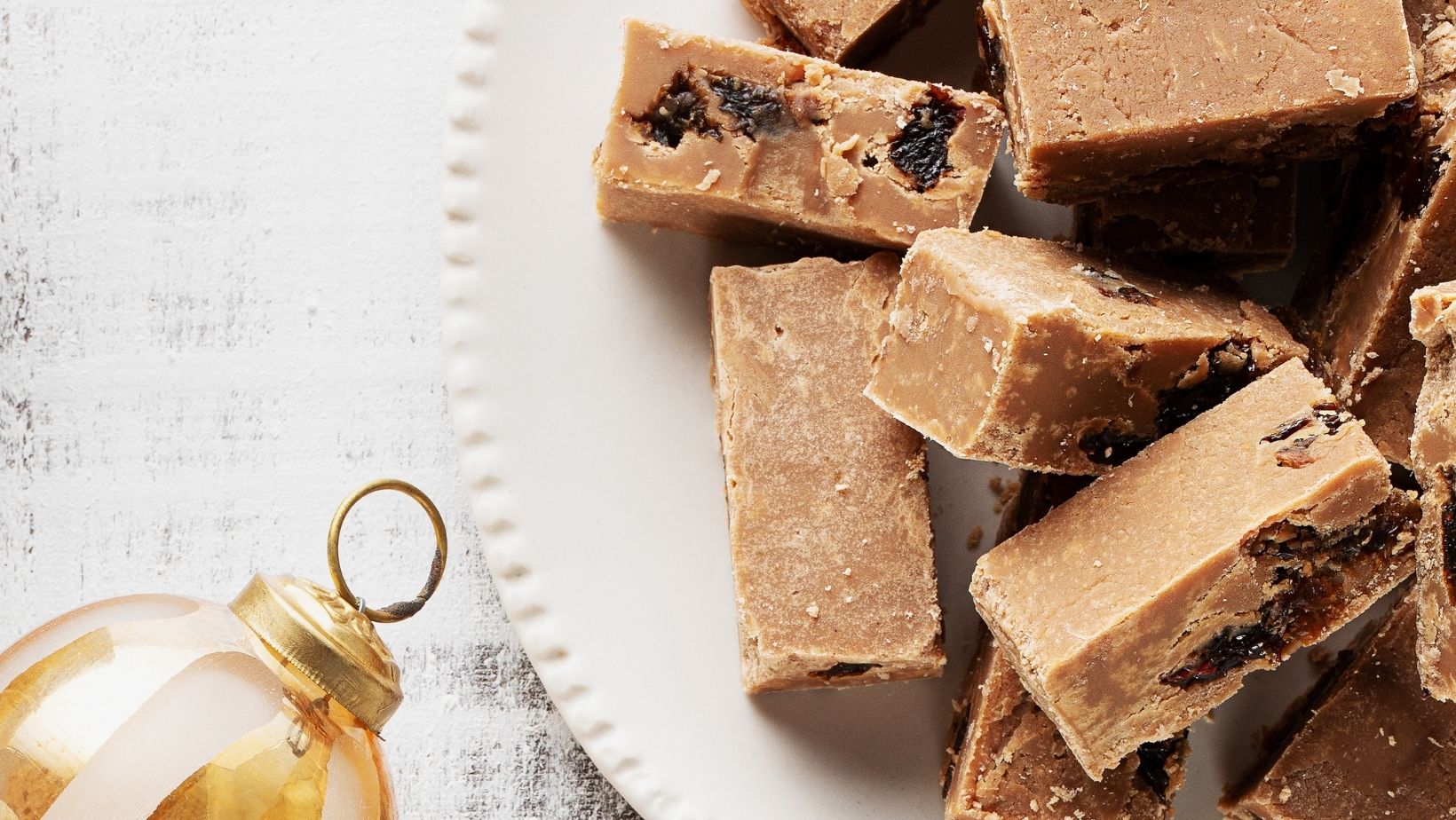
Rum and Raisin Fudge
Preparation 10 Minutes
Cook 15 Minutes
Serves 32
Method
Lightly grease and line base and sides of a 20cm square baking tin.
Combine raisins and rum in a small bowl and allow to soak for 10 mins.
In a medium saucepan combine sweetened condensed milk, butter, sugar and golden syrup and constantly stir over a low heat until the sugar has completely dissolved.
Increase the heat to medium-high and bring the mixture to a boil. Reduce heat to low, stir constantly for about 8-10 mins until the temperature reaches between 113-115ºC.*
Remove pan from heat, add chocolate melts and soaked raisins and stir to combine. Transfer to prepared tin using a spatula to smooth the surface then allow to cool at room temperature for 5-6 hours until firm.
Cut into 5cm long slices then cut each slice into 8 rectangles.
If you don’t own a candy thermometer, you can also check if the fudge is ready by taking a small amount and dropping it into a glass of cold water. When the mixture sets into a soft ball that doesn’t stick to your fingers when gently pinched, the fudge is ready. This is referred to as “soft ball” stage.
Ingredients
160g Sunbeam Raisins
2 tbsp rum
395g sweetened condensed milk
125g butter, chopped
220g brown sugar
2 tbsp golden syrup
150g milk chocolate melts
Recipe Collection

Fruit & Nut Biscotti
Heat oven to 180 degrees C. Generously butter or spray bottom and sides of loaf pan with cooking spray.
In large bowl, stir flour, nuts, sultanas, flax seeds, brown sugar, salt and baking soda. Stir in milk. Pour batter evenly into prepared pan.
Bake 50 minutes until golden brown. Cool completely in pan on cooling rack. Transfer to freezer and freeze at least 1 hour, but no more than 3 hours.
Heat oven to 200 degrees c. Remove loaf from pan. Use sharp serrated knife to cut loaf into 1/8-inch thick slices. Arrange slices in single layer on rimmed baking sheets. Bake 15 minutes until golden brown, flipping halfway through baking. Transfer to cooling rack to cool completely.
Store at room temperature in airtight container up to 1 week.
Butter Biscuit Wreaths
-
Preheat oven to 160°C and line with baking trays. Set aside 1/4 cup raisins for decorating. Roughly chop remaining raisins.
-
Beat butter and sugar with electric mixer until light and creamy. Sift in flour and mixed spice and add chopped raisins. Mix until combined. Divide dough in half and form into two disks. Wrap and refrigerate 30 minutes or until firm.
-
Roll dough between sheets of baking paper to 0.5cm thick. Cut 8cm rounds with cookie cutter. Transfer to lined baking trays and cut 3cm circles from middle of rounds to form rings. Reroll dough as necessary and refrigerate if too soft. Bake 15-20 minutes until lightly coloured. Cool on trays.
-
To decorate, working with one biscuit at a time, drizzle white chocolate over the top and decorate with raisins, almonds and other decorations.
Chocolate, Christmas, Gifting, Recipes, Sweet Treats
In slow 160 degree oven roast almonds on small tray for approx 10 min. Leave to cool then dice.
Roughly chop dates & apricots fairly fine. Place in small saucepan add water and heat on a low temperature till starting to soften.
Take off heat and stir in bi-carb till it starts to foam. Then set aside to cool.
Place biscuits in food processor and blitz to form fine bread crumbs. Add all the ingredients (except chocolate) and mix together, saving 10g of diced almonds to garnish.
Place in refrigerator for 1/2hr to cool and firm.
Melt Chocolate in a narrow deep jug for 1 minute in microwave, then 10-20sec intervals until fully melted.
Roll small balls of mixture and dip into melted chocolate. Use a fork to remove out of chocolate and tap excess off.
Place on tray covered in baking paper, garnish with almonds and refrigerate until set.
Lamb Rogan Josh
- Heat half of the oil in a large frying pan, add onion, garlic and ginger, cook for 3-4 minutes until tender. Add rogan josh paste and cook a further minute until fragrant. Add to the pot of a slow cooker.
- Using the remaining oil, sear lamb in batches until well browned. Add to the slow cooker with the tomatoes and water. Cook on low heat for 8 hours. Stir in garam masala and season well.
- Serve lamb with almonds, coriander and papadums.*For a faster cooking time, cook on High heat for 4 hours.
Beef & Apricot Tagine
1. Heat half of the oil in a large frying pan, add onion and garlic and cook for 3-4 minutes until tender. Add spices and cook a further minute until fragrant. Add to the pot of a slow cooker.
2. Using the remaining oil, sear beef in batches until well browned. Add to the slow cooker with the stock, tomatoes, cinnamon and orange peel. Cook on low heat for 8 hours.
3. Add the apricots and chickpeas in the last 30 minutes of cooking time. Season well. Serve beef with almonds and coriander and accompany with rice and yoghurt.
*For a faster cooking time, cook on High heat for 4 hours.
Chocolate & Prune Pudding
- Grease the base and sides of a 1.5L pudding basin. Combine prunes, raisins, sultanas and brandy in a microwave proof bowl and cook for 2 minutes. Stir well and set aside.
- Place butter and sugar in the bowl of an electric mixer. Beat until smooth and pale. Add eggs one at a time until well incorporated. Fold in the flour, breadcrumbs, cocoa, chocolate and mixed spice, followed by the fruit mixture. Mix until well combined.
- Pour batter into prepared pudding basin and cover (if no lid, use a couple of layers of baking paper and secure with string or a large elastic band. Then cover with a layer of foil, securing with a large elastic band. Place into a large pot with a small saucepan in the base. Pour in enough boiling water to come halfway up the sides of the basin. Cover with a lid and simmer for 3 hours. Top up water as required.
- Remove from pot and either serve immediately, or leave in the basin and refrigerate until required.
- For butterscotch sauce, combine all ingredients in a small saucepan, and gently bring to the boil. Simmer for 5 minutes, then remove from heat and set aside.
- For mascarpone cream, fold mixed spice into mascarpone and set aside until required.
- For serving, place upturned pudding onto a serving plate and dollop with mascarpone and drizzle with butterscotch sauce. Decorate with seasonal fruits and toasted nuts.